
The digital landscape is moving into a new phase.
For years, businesses focused on having a website, running social media campaigns, investing in SEO and adopting cloud-based software.
In 2026, that is no longer enough.
Artificial intelligence is becoming part of the way customers discover products, evaluate brands, make purchasing decisions and interact with businesses. At the same time, businesses are using AI to automate processes, analyze data and improve project delivery.
This creates a major opportunity — but also a new challenge.
Businesses need to rethink not only what technology they use, but how technology fits into the entire business journey.
Traditional e-commerce generally works like this:
Search → Browse → Compare → Purchase
AI is beginning to change that journey.
Customers can increasingly describe what they want in natural language and allow AI systems to help identify suitable products.
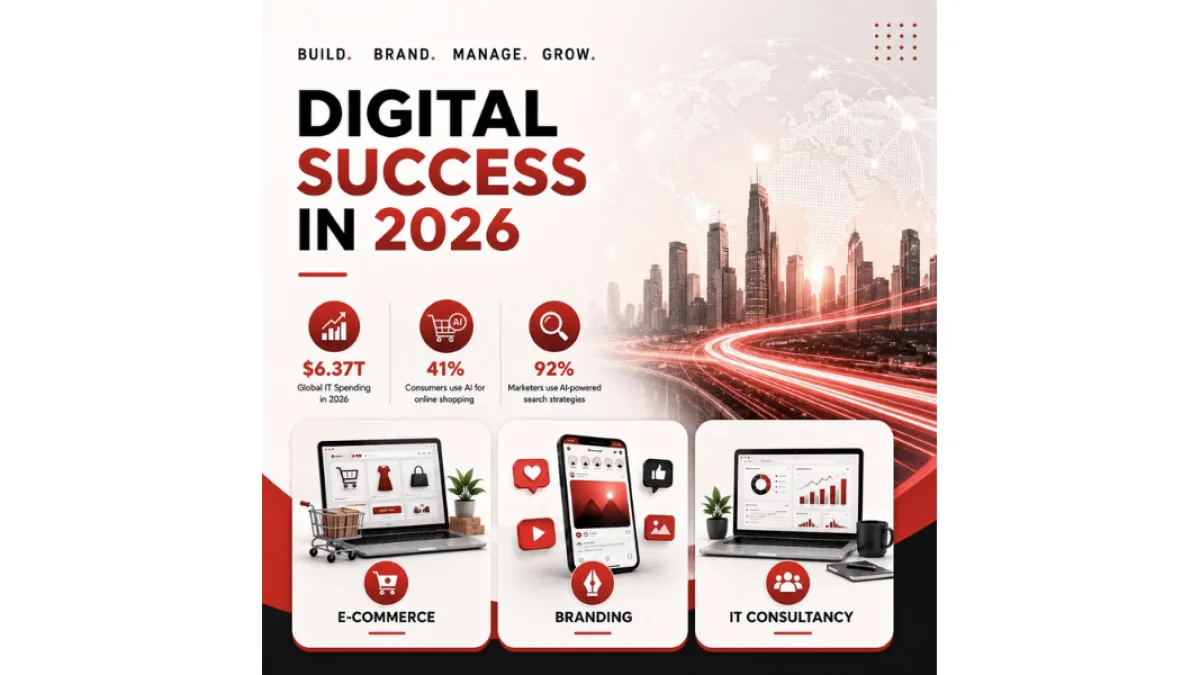
Recent reporting from Reuters, citing Adobe Analytics, found that 41% of U.S. consumers had used generative AI for online shopping in June 2026. More importantly, visitors referred by AI services generated 41% higher revenue per visit than visitors arriving through traditional channels. (Reuters)
This means e-commerce businesses need to think beyond traditional SEO.
Product information needs to be:
Accurate
Structured
Easy for AI systems to understand
Detailed enough to answer customer questions
Consistent across digital channels
This is one reason AI-ready product data and conversational shopping experiences are becoming important e-commerce investments.
Publicis Sapient’s 2026 e-commerce research identifies generative AI, personalization and conversational search among the trends shaping the future of digital commerce. (Publicis Sapient)
Instead of asking:
“How do I get more website traffic?”
businesses increasingly need to ask:
“Can customers — and AI systems — easily understand what we sell and why it is relevant?”
Digital branding used to focus heavily on:
Logo
Website
Social media
Advertising
Search rankings
These are still important.
But discovery is becoming more fragmented.
A potential customer might discover a business through Google, Instagram, TikTok, YouTube, a marketplace or an AI assistant.
This creates a new requirement:
HubSpot’s 2026 marketing data reports that more than 92% of marketers are using or planning to use SEO optimization for both traditional and AI-powered search. It also reports that nearly 30% of marketers have experienced declining search traffic as consumers increasingly use AI tools. (hubspot.com)
This does not mean traditional SEO is disappearing.
Instead, businesses need to think about search visibility + AI visibility + social visibility.
Content should answer real customer questions rather than simply target keywords.
Deloitte’s 2026 marketing trends also highlights the increasing role of AI in marketing and the growing pressure on businesses to demonstrate measurable ROI rather than relying on “blind” marketing spend. (Deloitte)
Instead of simply asking:
“Does our brand look good?”
businesses should also ask:
“Can people find us, understand us and trust us across today’s digital channels?”
Social media is increasingly connected to commerce.
Customers can discover a product through content, research it through social platforms, interact with a brand and move toward purchase without following the traditional website-first journey.
Research from PostNord identifies AI innovation and social commerce as major areas shaping e-commerce in 2026. (postnord.com)
This means digital media and branding cannot operate separately from e-commerce.
A social post can become:
Content → Discovery → Product interest → Recommendation → Purchase
For businesses, this makes the quality of their content increasingly important.
The objective is no longer simply to generate likes.
It is to create content that:
Educates
Builds trust
Demonstrates expertise
Creates demand
Helps customers make decisions
AI is also changing what happens behind the scenes.
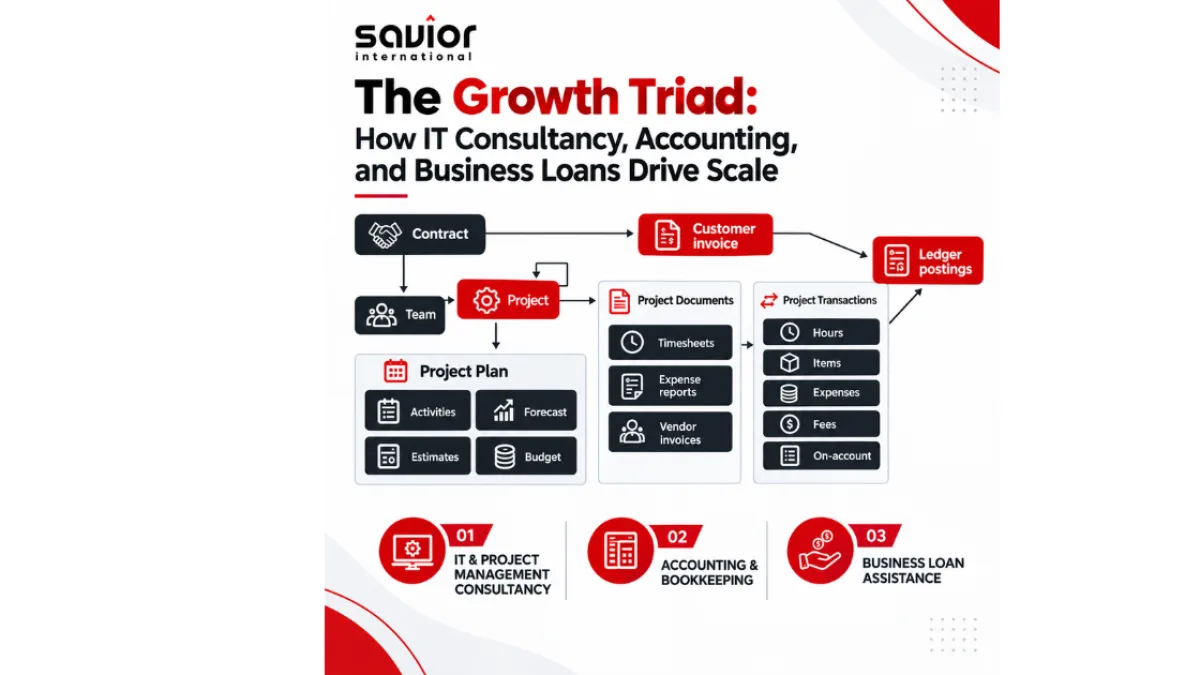
Project management traditionally involves:
Planning
Scheduling
Resource allocation
Reporting
Risk management
Communication
Tracking progress
AI can increasingly assist with many of these activities.
The Association for Project Management identifies the rise of a hybrid human-AI workforce and the growing importance of agentic AI as key trends for project management in 2026. (apm.org.uk)
APM’s later 2026 analysis goes further, describing a shift toward AI-native project management, where AI is becoming part of the underlying project-management workflow rather than simply another software feature. (apm.org.uk)
This does not mean project managers become unnecessary.
Instead, their role can shift toward:
Decision-making + leadership + stakeholder management + strategy
while AI assists with repetitive analysis and workflow activities.
Technology consultancy is also changing.
Businesses are no longer interested in technology simply because it is new.
They increasingly want to know:
What problem will this solve?
How much will it save?
Will it increase revenue?
Can it improve productivity?
How quickly can we see results?
Recent Financial Times reporting highlights how AI is putting pressure on traditional technology consulting models, with businesses increasingly looking for lower-cost, outcome-focused technology solutions while also bringing some capabilities in-house. (Financial Times)
At the same time, global IT spending is projected to reach approximately $6.37 trillion in 2026, according to Gartner figures reported by The Wall Street Journal, with AI infrastructure being a major driver. (The Wall Street Journal)
This creates an interesting contradiction:
Businesses are spending more on technology, but they are becoming more demanding about the value that technology delivers.
6. What Does This Mean for Businesses?
The important lesson is that these areas should not be treated independently.
Needs to become more intelligent, personalized and AI-discoverable.
Needs to build trust and visibility across search, social and AI-powered discovery.
Needs to combine human leadership with AI-assisted workflows.
Needs to focus on measurable business outcomes rather than technology for technology’s sake.
Together, these create a broader digital transformation cycle:
Attract → Discover → Engage → Convert → Deliver → Improve
Technology can support every stage.
Businesses do not need to adopt every new AI tool.
A better approach is to identify where technology can create measurable value.
1. Can customers easily find us?
Review your website, SEO, social presence and AI-search visibility.
2. Can customers understand what we offer?
Make product and service information clear, structured and useful.
3. Where are customers dropping out?
Use analytics to identify weaknesses in the customer journey.
4. Which repetitive processes can be automated?
Look at customer service, reporting, data processing, project updates and internal workflows.
5. Can we measure the return?
Every technology or marketing investment should have a measurable objective.
The biggest digital trend of 2026 isn’t simply AI.
It is the integration of AI into the way businesses operate.
E-commerce is becoming more intelligent.
Digital branding is becoming more data-driven and AI-aware.
Project management is becoming increasingly AI-assisted.
And IT consultancy is becoming more focused on measurable business value.
The businesses that benefit most will not necessarily be those using the most technology.
They will be the businesses that use the right technology for the right problem — while keeping human strategy, creativity and judgment at the center.
Digital transformation is no longer about becoming digital.
It is about becoming smarter, more connected and more adaptable